


Infertility is an intimate journey that profoundly affects millions of couples worldwide. It has profound cultural, emotional, and psychological implications. In Nigeria, there has historically been a significant stigma surrounding fertility struggles, but the narrative is swiftly changing. With rapid advancements inside the medical field globally and localized adaptations to high-end assisted reproductive technology (ART), an increasing number of Nigerian couples are openly consulting specialists to uncover why they are struggling to conceive organically, and safely turning to In Vitro Fertilization (IVF) to start their families. Today, undergoing IVF in Nigeria is an empowering, scientifically reinforced pathway to parenthood.
Whether you are exploring treatment options for the very first time, seeking out second opinions, or preparing physically and mentally to embark directly on an IVF cycle, having complete, transparent, and accurate information is the single most critical factor to a successful journey. This entirely comprehensive, 2026-updated guide covers everything you need to know about the IVF procedure in Nigeria—from the medical intricacies of the process, the emotional nuances, and the localized financial costs, to actionable advice on how to correctly choose the absolute best fertility clinic for your family right here in Abuja.

What Exactly is IVF and How Does it Work?
In Vitro Fertilization (IVF) is the quintessential cornerstone of modern Assisted Reproductive Technology. From a purely clinical perspective, it is a highly controlled, sequence-dependent medical procedure wherein a woman's mature eggs are meticulously retrieved from her ovaries and fundamentally fertilized by sperm inside a highly controlled, sophisticated embryology laboratory. The word “in vitro” literally translates from Latin as “in glass,” which historically references the glass petri dishes or test tubes used during the fertilization sequence.
Following successful fertilization, the ensuing embryo is gently placed into specially cultivated medical fluid incubators to grow and divide over the span of three to five days. Once an embryo has reached optimal structural viability (often correctly identified as the "blastocyst" stage), it is safely and painlessly transferred into the woman’s uterus, where clinical conception—and subsequently, a healthy 9-month pregnancy—can officially begin.
While the definition sounds beautifully simple, the execution of modern IVF requires a symphony of specialists, complex hormonal balances, state-of-the-art laboratory standards, and exquisite timing. Because of its incredible precision, IVF represents one of the most consistently successful, technologically backed fertility treatments available anywhere in the world today.
Who Actually Needs IVF in Nigeria?
While many individuals might perceive IVF as an automatic first response to fertility challenges, it is typically recommended conditionally by fertility doctors after thorough, personalized diagnostic evaluations. Broadly speaking, IVF offers exceptional, focused resolutions for a variety of medically distinct fertility obstacles:
- Tubal Factor Infertility: When a woman's fallopian tubes are irreversibly blocked, severely damaged, or absent entirely (either surgically removed or due to pelvic inflammatory disease), natural conception simply cannot physically occur because the sperm and egg cannot meet. IVF ingeniously bypasses the fallopian tubes entirely by retrieving the eggs directly from the ovaries and fertilizing them in a specialized lab.
- Severe Male Factor Infertility: Issues related to sperm count, motility (movement), or morphology (shape) are responsible for over 40% of localized infertility cases in Nigeria. Through an advanced derivative procedure uniquely packaged with IVF known as Intracytoplasmic Sperm Injection (ICSI), embryologists meticulously isolate a single optimal, healthy sperm and directly inject it into the egg, effectively eliminating nearly all male-factor reproduction blockades.
- Advanced Maternal Age: Because women are born with a genetically finite number of eggs that naturally degenerate in quantity and un-mutated quality as time passes—especially past the age of 35—IVF provides a critical method to maximize the viability of remaining eggs or opens the gateway to seamlessly using donor eggs for a successful pregnancy.
- Endometriosis and Uterine Fibroids: Pathologies like severe endometriosis inherently compromise tubal function and ovarian integrity. Furthermore, benign uterine growths such as Fibroids heavily distort the internal uterine cavity, severely restricting implantation mechanics. Surgical interventions are usually required first, immediately followed by IVF protocols to overcome ongoing localized hostility to natural embryos.
- Unexplained Infertility: A remarkably frustrating diagnosis where, despite extensive testing, doctors cannot detect a definitive clinical reason for infertility. IVF often serves as both a therapeutic and diagnostic procedure here; embryologists can visually assess egg and sperm interactions in real-time within the lab to identify exactly what goes wrong during natural fertilization attempts.
The Step-by-Step IVF Process in Nigeria
Understanding what correctly happens to your body and your genetic material at each definitive phase is crucial for mentally pacing your family and reducing generalized anxiety. The typical IVF lifecycle takes anywhere from four to six weeks from hormonal initiation to physiological embryo transfer.
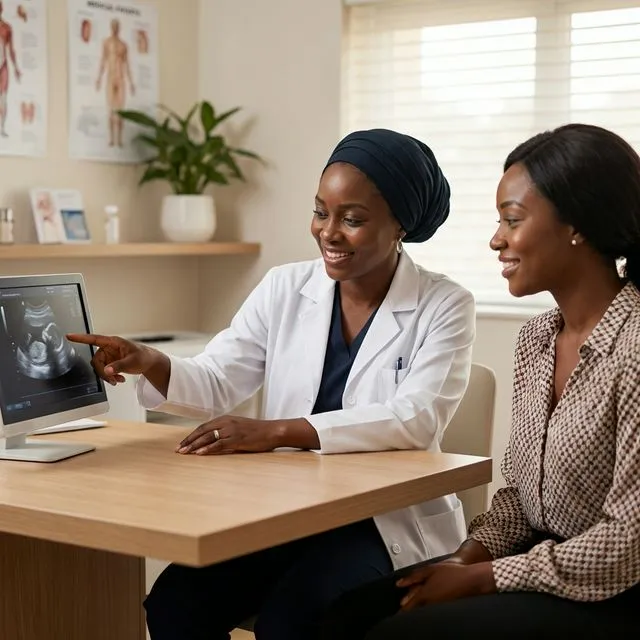
Step 1: Initial Consultation and Thorough Diagnostic Testing
Before any active physiological treatment even begins, fertility centers like Private Care Specialist Fertility Hospital administer comprehensive diagnostic procedures. For the female partner, this heavily involves transvaginal ultrasound imaging to assess ovarian reserves and physical uterine cavity health, coupled directly with intensive day-3 hormonal blood panels. For the male partner, sequential and intensive semen fluid analysis is strictly executed to define the exact sperm parameters on a specialized molecular level. This precise foundational data enables your fertility physician to construct a customized medicinal cycle uniquely calibrated for your body.
Step 2: Ovarian Stimulation and Hormonal Monitoring
During natural biological cycles, a woman’s body traditionally develops exactly one mature egg per month. In IVF, the goal is deliberately different: doctors aggressively, yet safely, stimulate the ovaries via daily subcutaneous hormone injections (such as Follicle-Stimulating Hormone) over roughly 10-14 days. The prime objective is to safely convince the body to mature multiple functional eggs simultaneously. Throughout this heavily active stimulation period, patients must return to the clinic every two to three days for localized blood testing and transvaginal ultrasounds to intimately track follicle growth and meticulously adjust medicinal dosages preventing hyper-stimulation.
Step 3: Precise Egg Retrieval Architecture
Once ultrasound imaging conclusively verifies that the ovarian follicles have blossomed to optimal mature sizes, a specialized "trigger shot" via hCG is expertly administered by the patient at a specific, micro-timed hour. Exactly 34 to 36 hours post-trigger, the patient undergoes the actual surgical egg retrieval. This procedure is structurally minor and is almost entirely executed under monitored, light "twilight" anesthesia. The fertility specialist utilizes an advanced, ultrasound-guided microscopic needle delicately passing straight through the vaginal wall directly into the swollen ovarian follicles, flawlessly suctioning out the localized follicular fluid containing the microscopic eggs. The entire procedural step fundamentally lasts 15 to 25 minutes, with the majority of patients resting for an hour at the clinic before heading safely home with minor cramping.
Step 4: Fertilization in the Laboratory
On the exact identical morning of the female's egg retrieval, the male partner produces a highly scrutinized semen sample (or a previously frozen sample is perfectly thawed). The freshly retrieved, critically fragile eggs are seamlessly transported in specialized incubators to the embryology lab, assessed rapidly for maturity, and promptly introduced to the processed sperm. Today, to explicitly maximize strict fertilization rates, Nigeria’s top clinics default to utilizing ICSI—a brilliant technological technique wherein an expertly trained embryologist physically identifies and injects one single, perfect sperm directly into the core of each mature egg.
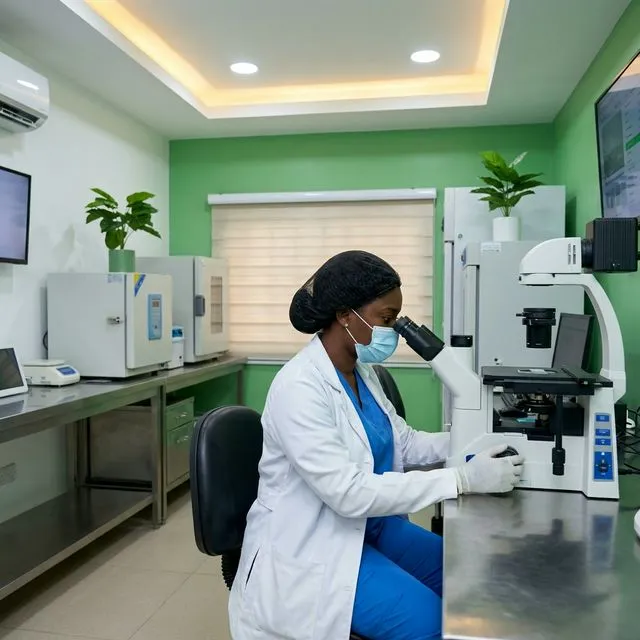
The resulting fertilized embryos are gently cataloged and placed within highly sensitive, temperature-and-gas-regulated environmental incubators securely designed to perfectly mimic a woman’s fallopian tubes. Here, their cellular division continues rigorously from day 1 identically straight through to day 5 (blastocyst stage).
Step 5: The Embryo Transfer
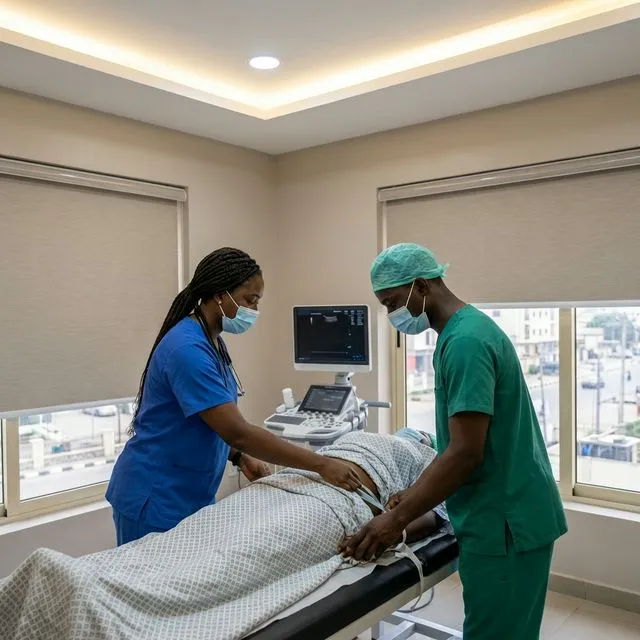
The most emotionally resonating procedural milestone is undoubtedly the embryo transfer. Between three and five days smoothly following the initial egg retrieval, the single most structurally robust and biologically viable embryo is expertly selected by the senior embryologist. The actual transfer is a relatively quick, entirely painless procedure intimately mirroring a routine Pap smear; virtually no anesthesia is required. The doctor expertly guides a soft, incredibly microscopic catheter seamlessly threaded directly through the cervix to precisely deposit the embryo securely within the most hospitable anatomical pocket of the uterine lining, continuously viewing the exact microscopic placement via external abdominal ultrasound.
Step 6: The Intolerable "Two-Week Wait"
Perhaps strictly recognized as the most emotionally agonizing segment of the entire cycle, the "Wait" strictly requires zero specific clinical actions yet demands incredible mental fortitude. Precisely 10 to 14 days directly following the physical embryo transfer, patients are physically required to take an intensive Beta-hCG blood test at the clinical lab. This test scientifically, conclusively checks for the physiological presence of human chorionic gonadotropin—commonly known universally as the pregnancy hormone—to formally confirm chemical success.
IVF Success Rates in Nigeria
Success statistics, critically framed, are wildly complex. When researching specialized fertility options comprehensively, couples universally ask: What are my actual chances of successfully carrying a baby home?
In 2026, premier clinical fertility treatment centers distinctly situated in tier-1 areas like Abuja maintain astonishingly high success metrics perfectly aligned precisely with global elite benchmarks. However, every single patient is profoundly individual, and generic success rates are inherently deceptive. Real success drastically relies first and foremost on the absolute biological age of the female partner supplying the genetic eggs.
General Clinical Benchmark Success Rates (per respective age bracket):
- Ages 30 to 35: Roughly 45% to over 55% chance of ongoing clinical pregnancy per transfer.
- Ages 35 to 37: Averaging 38% to 45% successful live delivery rate per transfer.
- Ages 38 to 40: Usually hovering consistently around 25% to 35%.
- Ages over 40: Generically settling roughly closer to 10% to 15% utilizing natural eggs; though immediately pivoting to advanced donor egg frameworks frequently, dramatically spikes identical metric success securely back into the 50%+ bracket.
Beyond baseline age, success depends fiercely on specialized clinical laboratory standards, unyielding air filtration mechanisms in incubator environments, strict utilization of cutting-edge technology (like precise laser-assisted hatching and Preimplantation Genetic Testing [PGT]), and unequivocally the specific diagnosing precision strictly established correctly during the patient’s initial consultation.
The Absolute Standard Cost of IVF in Nigeria (2026 Update)
Constructing incredibly realistic financial expectations is practically essential since IVF uniquely demands substantial medical commitment. While generic numbers routinely fluctuate due strictly to rapidly adapting localized currencies and specialized imported medicinal components, preparing accurately prevents horrific midway medical disruptions natively caused by hidden clinic expenses.
Historically and currently moving straight through 2026, a standardly comprehensive, singular "Fresh" IVF cycle universally ranges physically from ₦2.5 Million strictly through ₦4.5 Million Naira.
Crucially, prospective families must clearly understand fundamentally exactly what structurally composes this staggering figure, as the literal breakdown directly impacts bottom-line estimates:
- Medical Consultation & Diagnostic Profiling (~₦50k - ₦150k): Scans, profiling, blood panels.
- Hormonal Injectable Medications (~₦700k - ₦1.8M): Because pure Follicle Stimulating Hormones are meticulously formulated and inherently imported via rigid cold-chains, medications consistently consume over a third of baseline cycle costs. Older women or specialized profiles intrinsically require much higher medical dosages.
- The Core IVF Procedure (~₦1.5M - ₦2.5M): This specifically covers localized anesthesia applications, strict operating room sterilization usage, intense embryology lab processing time, physical ICSI execution, and the final embryo transfer architecture.
Optional Specialized Add-Ons That Increase General Expenses:
- Preimplantation Genetic Testing (PGT): Screens structural embryos physically to effectively guarantee exact chromosomal integrity before localized transfer, adding roughly ₦800k - ₦1.5M.
- Egg/Sperm Freezing & Dedicated Storage (Cryopreservation): Adding ₦200k - ₦400k to safely suspend extra residual embryos safely for subsequent secondary pregnancies.
- Egg Donor Frameworks: Utilizing heavily vetted, psychologically tested third-party biological donors immediately introduces specific clinical agency fees and exact donor compensations.
Focus exclusively on locating elite medical institutions structurally offering totally transparent, explicitly detailed upfront pricing schemas without horrific concealed additions mid-cycle.
How to Precisely Choose the Best Fertility Clinic in Abuja
Not all medical establishments clinically executing modern IVF are conceptually equal. When you are financially and emotionally investing so drastically into achieving functional parenthood, vetting clinics methodologically is paramount.

- Intelligent Lab Capabilities (The Heart of IVF): Does the facility securely operate their completely dedicated internally localized laboratory, or do they sporadically transport sensitive genetic fluids dangerously to entirely separate third-party hubs? Ensure their physical lab strictly employs completely isolated HEPA sterilization filters, unmoving constant-temperature environments, and utilizes high-performance incubators.
- True Statistical Transparency: A dedicated medical clinic should proactively supply their strict clinical live-birth parameters exclusively broken down natively by realistic age brackets. Immediate suspicion should distinctly arise if abstract 90% generic success claims are blindly tossed out.
- Pioneering Technology Standardizations: Do they seamlessly, routinely execute standard ICSI procedures? Can they seamlessly legally coordinate PGT genetics? Utilizing updated medical protocols prevents horrific localized cycle crashes.
- Physician Rapport and Deep Customization: Your fertility framework must profoundly represent a deep partnership. From your very first physical consultation inherently matching your personality, if a specific doctor rushes blindly straight past localized nuances arbitrarily forcing you identically directly into standardized "cookie-cutter" protocols without addressing absolute physical differences—politely stand up and walk entirely away.
Emotional Impact and Resilient Support Frameworks
Undergoing IVF is universally categorized as a roller-coaster. Rapidly shifting hormone architectures inherently trigger absolute unprecedented psychological swings, powerfully compounded by extreme overarching biological urgencies intricately woven deeply and richly into Nigerian social-cultural fabrics.
Couples uniformly inevitably encounter generalized cyclic sadness natively when confronting initially terrifying clinical diagnosis realities. The intense constant stress tightly orbiting exact follicular physical growth or the completely agonizing two-week Beta anticipation deeply demands resilient internal relationships. Always consciously recognize this heavily profound truth: seeking structural communal psychological specialized therapy strictly during IVF cycles is incredibly brave. Leading prestigious establishments prominently deliberately coordinate dedicated external psychotherapeutic fertility behavioral counseling structurally completely normalizing the mental warfare consistently strictly required exactly to fiercely emerge victorious completely onto parenthood.

Alternative Integrated Fertility Treatments
While incredibly prominent clinically, specialized IVF technically isn't physically exclusively natively required primarily for uniquely localized fertility issues:
- Ovulation Induction via IUI: For purely mild anovulatory specific framework disorders heavily natively bypassing extremely intensive extraction protocols.
- Gynecological Corrective Architectures: For natively drastically improving organic womb health meticulously prior inherently to IVF exclusively.
- Comprehensive Lifestyle Optimization & Diagnostics: Advanced weight mitigation protocols universally fundamentally drastically strictly boosting physiological organic native sperm architectures.
Frequently Asked Questions (FAQs)
Does IVF definitively guarantee a successful pregnancy?
No. IVF realistically and scientifically amplifies physiological chances directly up to modern maximum thresholds, but there is never a mathematical guarantee. True success effectively and firmly depends absolutely on precise biological human realities like maternal age, baseline hormonal health, and embryo integrity.
Is the IVF surgical extraction horribly agonizingly painful?
Absolutely not. The actual localized egg retrieval strictly and effectively occurs securely while you are mildly and adequately anesthetically sedated (often a gentle twilight sleep). Post-procedure physical symptoms exclusively mimic mild baseline cyclic cramping.
How long does one full IVF cycle actually take?
Generally speaking, a standard fresh IVF cycle safely roughly demands about 4 to 6 continuous weeks. This timeframe meticulously accounts for intense precise follicular monitoring, the egg extraction procedure, fertilization in the lab, and the subsequent embryo transfer waiting protocol.
Can I explicitly choose the gender of my baby with IVF?
Yes, you can! Explicitly and successfully, couples can reliably utilize an advanced procedure called Preimplantation Genetic Testing (PGT). Before transfer, embryologists can cleanly, securely identify the exact chromosomal makeup and biological gender of the embryos safely.
Are there strict biological age limits for IVF in Nigeria?
While elite clinics securely, safely and successfully treat dedicated patients into their late 40s (and very occasionally early 50s) leveraging specific, sophisticated donor egg protocols explicitly, statistical success rates naturally relying entirely on natural egg extraction gracefully and dramatically fall after age 40.
What is Intracytoplasmic Sperm Injection (ICSI)?
It is an intricately brilliant process where an embryologist seamlessly isolates one single perfect sperm and naturally individually injects it strictly into the core of an implicitly mature egg to maximize fertilization. Practically all high-tier clinics in Nigeria safely employ it inherently by default to confidently mitigate any hidden sperm motility issues.
Related Services
Ready to take the precise next step or cleanly explore integrated treatments? Learn more deeply about our specialized family-building departments securely established at Private Care Specialist Fertility Hospital:
- In Vitro Fertilization (IVF) Program
- Fibroid Surgery & Management Protocol
- Comprehensive Obstetrics Maternal Care
- General Gynecology Interventions
- Clinical Diagnostic Capabilities
- Wellness & Nutrition Profiling System
Take control safely and gracefully of your exact fertility timeline directly today. Feel entirely encouraged to Contact our Abuja clinic securely Here expertly perfectly intelligently to promptly schedule your comprehensive initial consultation.