


When couples begin their fertility journey, one of the primary sources of anxiety—often rivaling the medical process itself—is understanding the financial investment required. Complete financial transparency is essential for reducing stress and ensuring that you can make fully informed, calm decisions about your future.
At Private Care Specialist Fertility Hospital in Abuja, we believe firmly that high-quality fertility treatment should not be obscured by hidden fees. This comprehensive guide breaks down exactly how much IVF costs in Nigeria in 2026, what those fees cover, and how couples are successfully budgeting for their treatments.
How Much Does IVF Cost in Nigeria in 2026?
As of 2026, the average total cost for a standard, single cycle of In Vitro Fertilization (IVF) in Nigeria generally ranges from ₦1,200,000 to ₦2,500,000.
This range is broad because fertility treatment is inherently highly personalized. No two couples require exactly the same dosage of medications, nor do they always require the exact same laboratory interventions. The final cost will completely depend on your specific medical diagnosis, maternal age, and the targeted procedural add-ons strictly required to maximize your chance of a healthy pregnancy.

What Is Included in the Standard IVF Cost?
When a reputable fertility clinic quotes a standard IVF package, it typically bundles several distinct medical phases together. Here is a granular breakdown of what your investment covers:
1. The Initial Consultation & Scans
Before any treatment begins, precise diagnostics are required. This phase includes baseline transvaginal ultrasounds to check the ovaries and uterus, alongside deep hormonal blood profiles (like AMH testing) for both partners.
2. Hormonal Stimulation Medications
This is often the most variable cost. These localized injectable medications (gonadotropins) safely stimulate the ovaries to produce multiple mature eggs in a single cycle rather than just one. Older women or those with lower ovarian reserve typically require much higher doses, driving the medication costs up.
3. Egg Retrieval Procedure
A minor surgical procedure performed under light, safe anesthesia, where the fertility specialist uses an ultrasound-guided needle strictly to extract the mature eggs directly from the ovarian follicles.
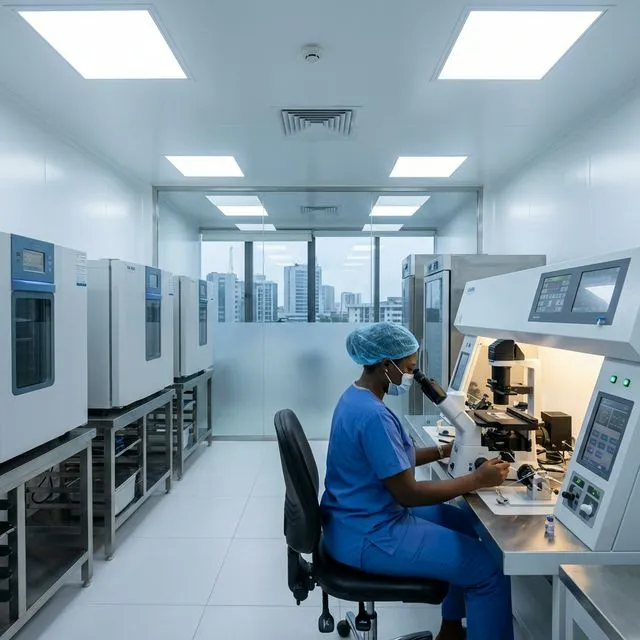
4. Laboratory Fertilization & Culturing
Once retrieved, the eggs are immediately rushed to the embryology lab. Here, they are carefully exposed to concentrated sperm. Over the next 3 to 5 days, our embryologists strictly monitor and culture the resulting embryos in highly controlled, specialized incubators.
5. Fresh Embryo Transfer
The medical transfer of the absolute best-quality embryo (or embryos) back into the mother's prepared uterus, completely guided by precision ultrasound.
What May Increase Your IVF Cost?
While standard IVF works dynamically for many, specific diagnoses (like severe male factor infertility or recurrent miscarriage) require highly advanced laboratory techniques. These are generally billed as add-ons:
- ICSI (Intracytoplasmic Sperm Injection): If sperm count or motility is remarkably low, the embryologist safely injects a single, healthy sperm directly into the center of the egg.
- Genetic Testing (PGT-A): Preimplantation Genetic Testing checks embryos for chromosomal abnormalities precisely before transfer. This significantly raises success rates but adds a premium cost.
- Frozen Embryo Transfer (FET): If you produce multiple high-quality embryos, freezing them dynamically for future use (cryopreservation) incurs storage and future preparation fees.
- Multiple Cycles: Unfortunately, standard IVF is not guaranteed on the very first attempt. Budgeting for the possibility of requiring a second cycle is a cautious and highly recommended approach.
Is IVF Covered by Insurance in Nigeria?
Currently, national health insurance programs (NHIA) and standard private HMOs in Nigeria do not generally cover the core costs of Assisted Reproductive Technology (ART) like IVF.
However, we are increasingly seeing progressive corporate employer plans that offer specialized “family building” stipends or allowances that partially reimburse routine fertility investigations or medications. Always deeply review your personalized HR benefits package to verify any hidden fertility coverage.
How to Financially Plan for IVF
Undergoing IVF Treatment is a significant investment. Here is how modern Nigerian couples successfully manage the financial commitment:
- Request a Granular Breakdown: Ensure your chosen clinic completely strips away hidden fees in writing before you begin.
- Explore Installment Plans: Many premium clinics, including our facilities in Abuja, offer structured, phased payment options aligned directly with your treatment milestones to heavily ease the immediate cash burden.
- Prepare for the Unexpected: Always pad your primary fertility budget by at least 15–20% specifically to securely cover unexpected extra medication days or the sudden need for embryo freezing.
Why Do IVF Costs Vary So Much Between Clinics?
You will notice different quotes widely across different Nigerian hospitals. This variation fundamentally comes down to three factors:
- Laboratory Quality: A premium, heavily filtered "clean room" embryology lab equipped with the latest time-lapse incubators significantly drastically increases success rates but carries massive overhead costs.
- Specialist Expertise: Clinics exclusively run by internationally board-certified fertility sub-specialists inherently charge for their vast, specialized experience compared to general gynecologists.
- Location: High-end clinics situated closely in premium areas of Abuja or Lagos will structurally reflect higher operational costs than those in smaller tiers.
Frequently Asked Questions
Why is IVF so expensive in Nigeria?
The high cost is predominantly driven by the fact that the highly specialized medical equipment, biological culture media, and the delicate hormonal stimulation drugs must natively be imported at international exchange rates. Additionally, maintaining a sterile 24/7 embryology lab requires immense technical resources.
Can IVF be done cheaper?
While heavily discounted IVF exists, it is critical to investigate why a clinic is inexpensive. Cheaper clinics may severely lack advanced lab filtration, compromise on ultrasound precision, or lack specialized embryologists—which dynamically lowers your statistical chance of bringing home a baby.
Is the IVF success rate directly related to the treatment cost?
Yes, up to a certain point. Investing in a premium clinic guarantees that your eggs and embryos are handled by top-tier technology and experts, heavily maximizing your statistical chances. However, spending more organically beyond the clinic’s standard premium care does not artificially change your underlying biological age or egg quality.
Take the Next Step Toward Your Family
Total financial transparency is simply our baseline standard at Private Care Specialist Fertility Hospital. From your very first deeply personalized consultation, our team explicitly outlines what your exact unique pathway will securely cost, so you can focus entirely on what matters most: your future baby.
Contact our financial and clinical team today to schedule a transparent consultation right here in Abuja.